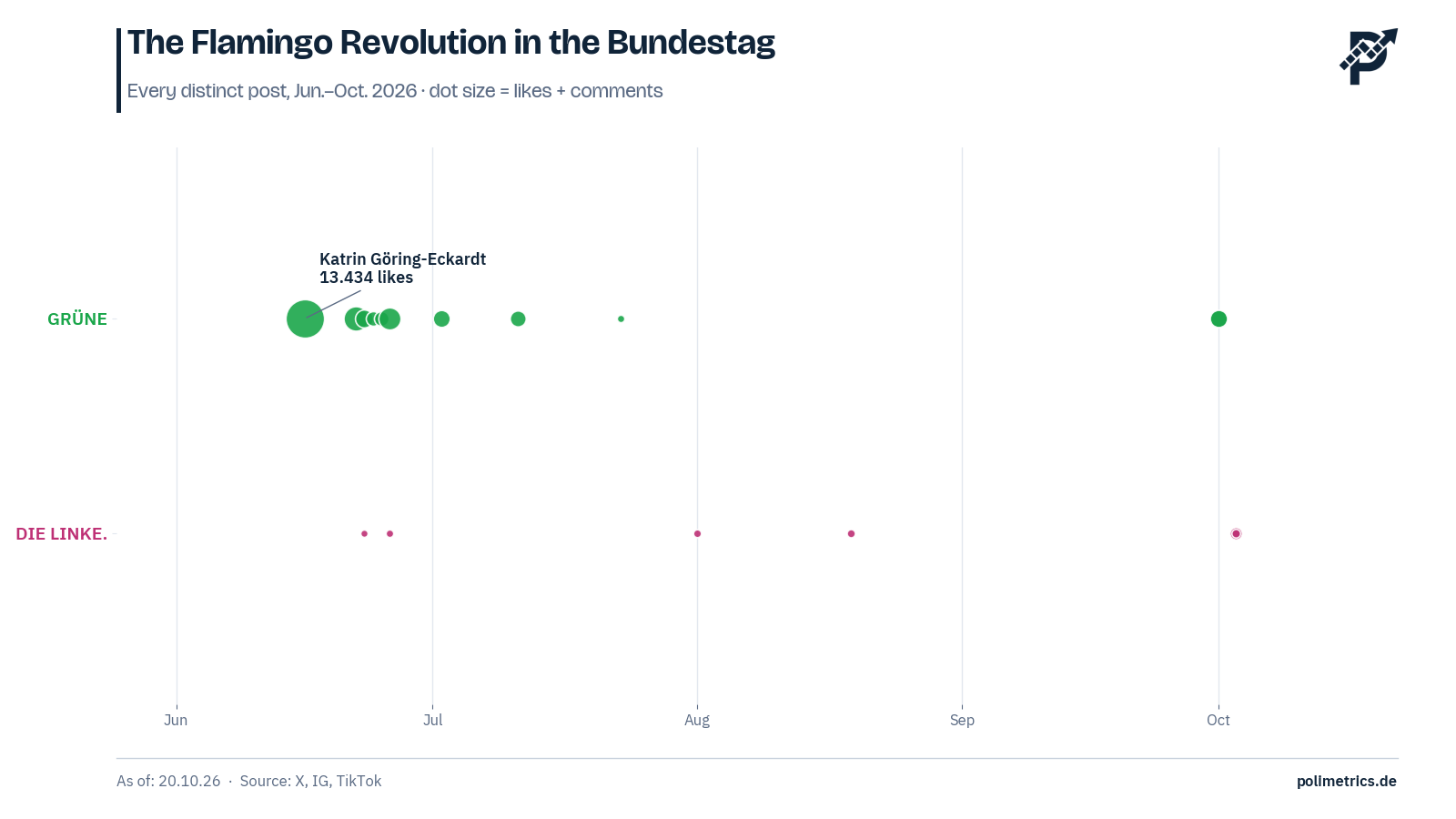
What stands out
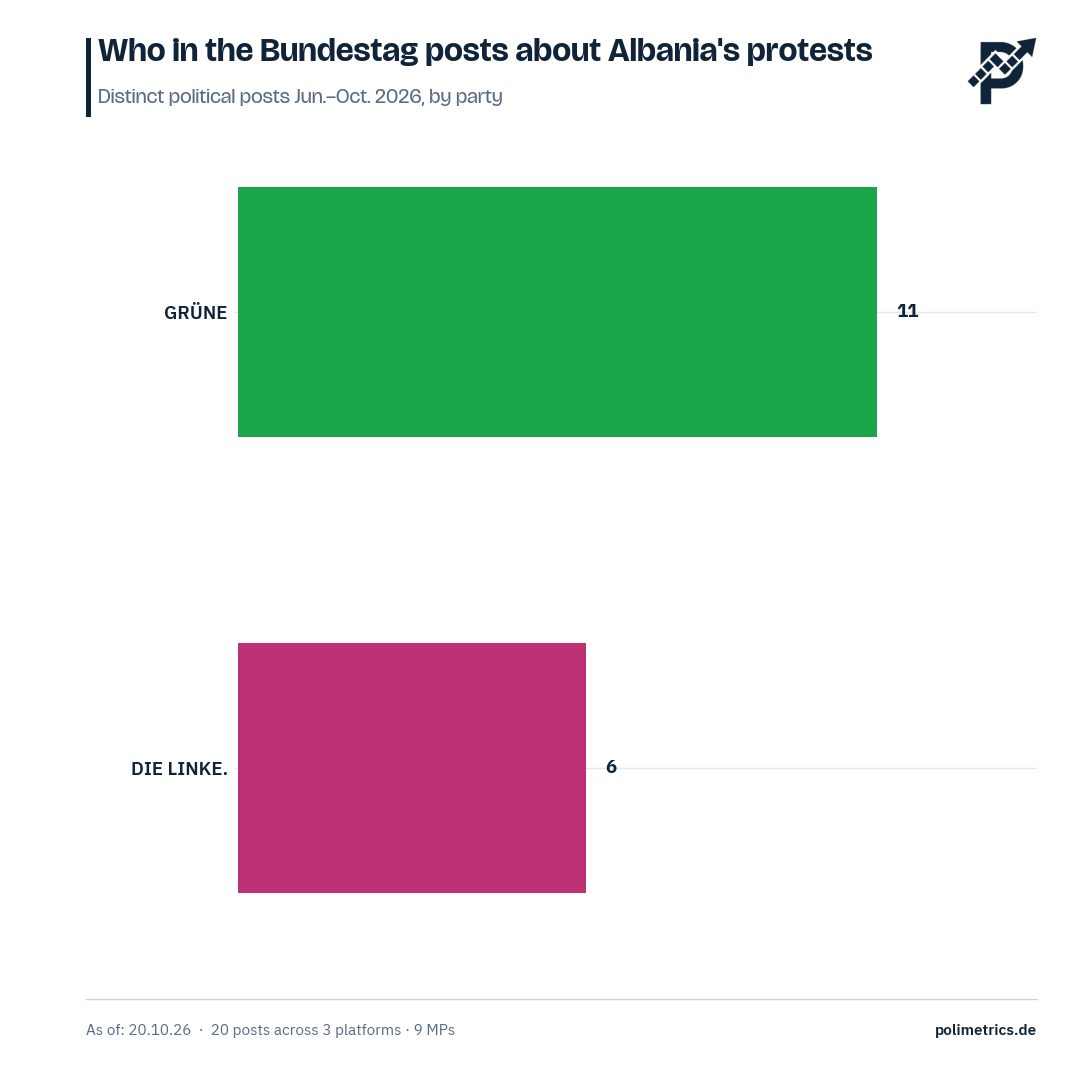
- The Flamingo Revolution is a topic for exactly two parliamentary parties: the Greens (11 posts) and Die Linke (6 posts). CDU/CSU, SPD, AfD, FDP, BSW and SSW: not a single post.
- None of the 17 posts appeared on X — despite checking over 26,000 tweets in the window. All the coverage runs through Instagram and TikTok.
- The single highest-reach post came from Bundestag Vice President Katrin Göring-Eckardt right at the start, on June 16 — 13,434 likes, more than double any other post on the topic.
- As we finish this analysis, a second, separate wave of unrest is escalating in Albania: violent student protests against Prime Minister Edi Rama that began October 12. At first, that new wave was completely absent from the Bundestag dataset — see the update below.
- Update, Oct 20, 2026: A full sweep of all roughly 1,500 Bundestag accounts the next day found the first CDU and AfD posts about Albania. Not about the Flamingo Revolution, though — about the other, newer protest wave against corruption and Prime Minister Rama.
The short version
Since mid-June 2026, people in Albania have taken to the streets almost daily. The trigger is a multi-billion-euro luxury resort project on Sazan Island and in the Vjosa-Narta nature reserve, backed by Jared Kushner — real estate developer, son-in-law of Donald Trump, and former White House adviser. The protest movement gave itself a name: the 'Flamingo Revolution', after the flamingos that live in the Narta lagoon. Its slogan: 'Albania is not for sale.'
We wanted to know whether the topic registers in the German Bundestag. So we searched every Bundestag account on X, Instagram and TikTok between June 1 and October 19, 2026, using an AI-assisted topic pipeline — an embedding prefilter plus two classification passes with Gemini 3.8 Flash, over roughly 77,500 posts in total.
Eleven Greens, six from Die Linke
We find 17 distinct posts from 9 MPs — not a footnote, but a recurring thread running through four months of coverage. But it comes from exactly two parties.
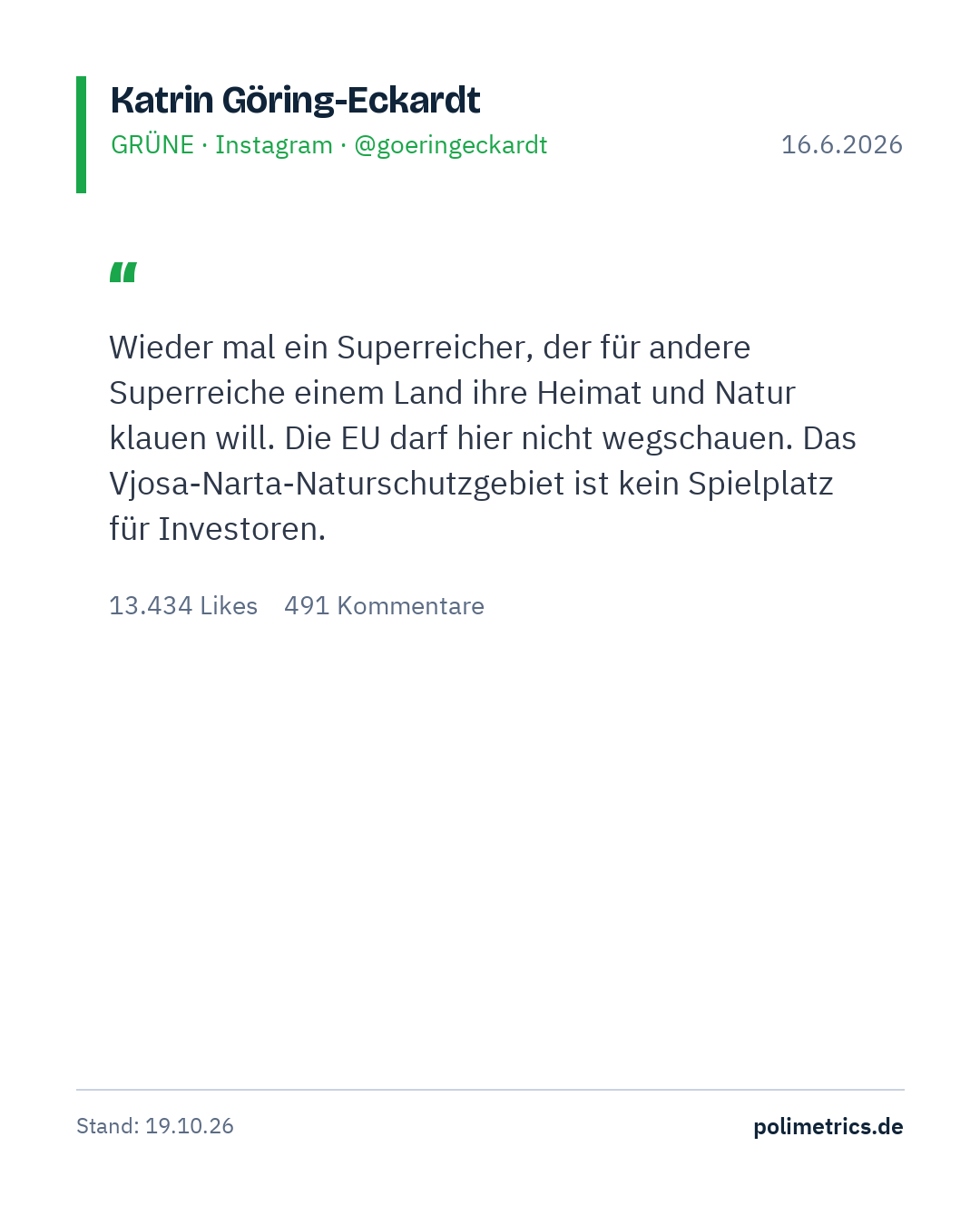
The Greens account for eleven of the 17 posts. Leading the pack is Steffi Lemke, former federal environment minister, who posts five times between June and July — several times bilingually in German and Albanian. Boris Mijatović travels to the Vjosa-Narta lagoon himself in July as part of a European Parliament delegation. And Katrin Göring-Eckardt sets the highest-reach mark of the entire debate with her opening post on June 16.
Die Linke accounts for six posts, with a different emphasis: less nature-conservation pathos, more political accountability. Gökay Akbulut turns the hashtag into parliamentary work, filing an official question to the federal government on Germany's stance in Albania's EU accession process — right as Prime Minister Edi Rama was publicly dismissing the protests as 'ideological nonsense'. Caren Lay visits the protests in August while on vacation and produces two explainer videos — the only MP in the dataset to also post on TikTok, each mirrored on Instagram at the same time.
What's missing from the dataset
Three gaps stand out. First: not a single X post, despite analyzing over 26,000 tweets in the window. All the coverage runs through Instagram and TikTok — visual platforms where flamingo symbolism and on-the-ground photos naturally stage better than short-text posts.
Second: no voice from CDU/CSU, SPD, AfD, FDP, BSW or SSW. That's notable because the Bundestag itself was on the ground during the window: a Tourism Committee delegation — with members from CDU, the Greens, Die Linke and AfD — visited Tirana in early October. Several delegation members posted from the trip, but only the Greens and Linke members among them also drew the connection to the Flamingo Revolution.
Third, and this was the real punchline at the time of the original analysis: since October 12, a second, separate wave of unrest has been escalating in Albania — violent protests over corruption, political cronyism, and calls for Prime Minister Rama's resignation, during which demonstrators set Albania's Education Ministry on fire, among other targets. This new wave was at first completely invisible in the Bundestag dataset. That changed a day later — see the update.
Update, October 20, 2026: CDU and AfD speak up — about the other wave
A day after wrapping up the original analysis, we checked again — this time not just the nine already-known Flamingo Revolution voices, but a full data sweep of all roughly 1,500 Bundestag accounts on X, Instagram and TikTok, run directly against the platforms' live data.
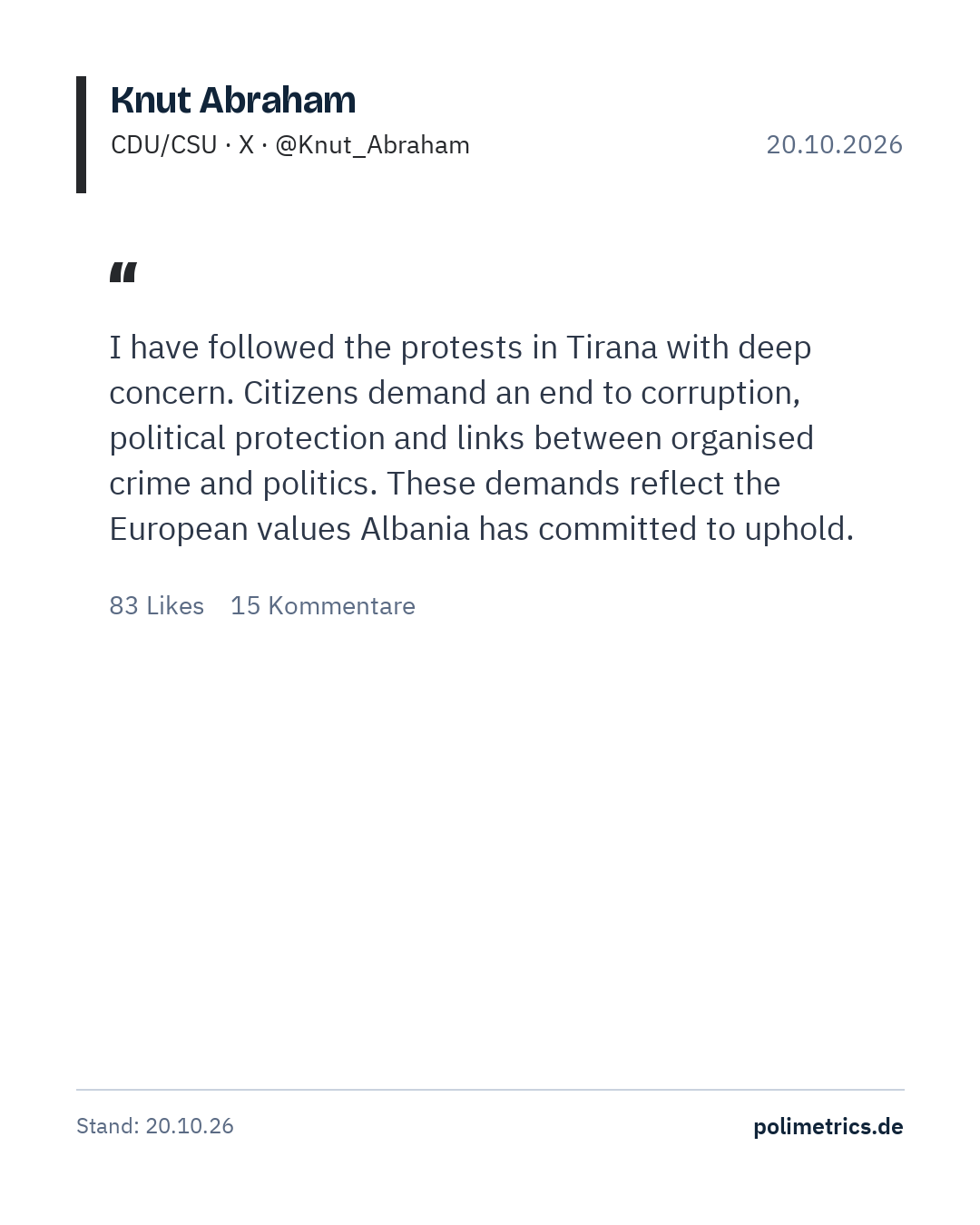
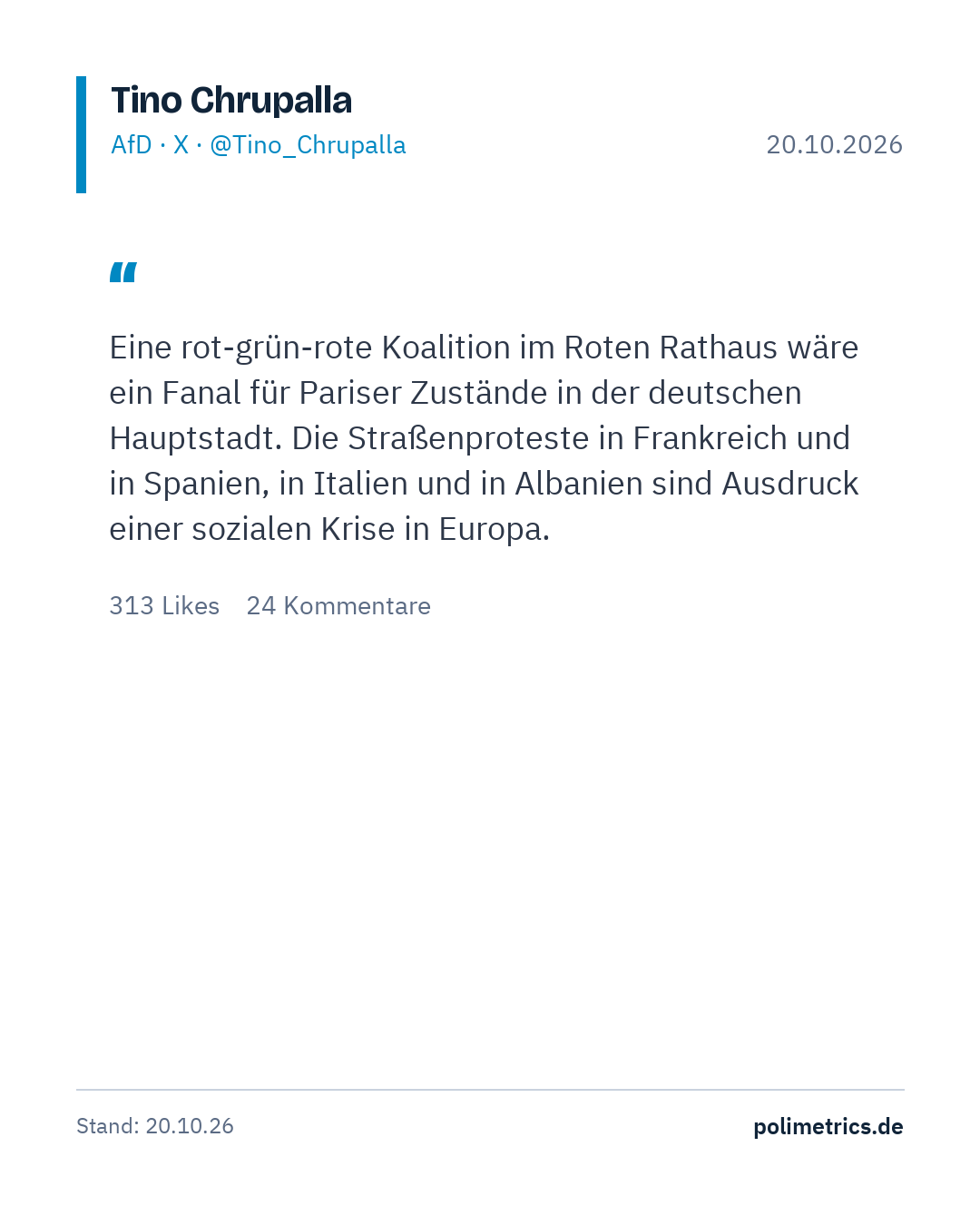
Result: for the first time in the entire observation window, CDU/CSU and AfD speak up. Knut Abraham (CDU/CSU) posts a substantive statement on X about the protests in Tirana — corruption, political protection, links between organized crime and politics, framed as a question of European values. Tino Chrupalla, AfD co-leader, mentions Albania in a post primarily aimed at Berlin's coalition debate — there he lists the street protests in Albania alongside France, Spain and Italy as evidence of a 'social crisis in Europe.'
Important for context: both posts clearly refer to the newer protest wave against corruption and Rama that has been escalating since October 12 — not to the Flamingo Revolution against the Kushner resort project that the rest of this analysis covers. These are two different movements with different triggers that happen to share a month and a country. The Flamingo Revolution remains, to this day, a topic exclusively for the Greens and Die Linke; the newer protest wave has now at least reached two parties on X — but with two posts against 17 for the Flamingo Revolution, the gap in attention is still stark.
Nine posts in detail
A selection of the most telling posts in the dataset, each linked to the original. The cards shown are quote cards we designed (not screenshots) — the text, name and numbers come directly from the collected data. The last two cards belong to the October 20 update and the other protest wave (see above).
Katrin Göring-Eckardt (Greens)
The Bundestag's Vice President opens the Bundestag's coverage of the topic and immediately sets the strongest mark: more than double the likes of any other post in the entire analysis window.
Steffi Lemke (Greens)
The former federal environment minister posts most often on the topic — from her first reaction on June 22 to a greeting sent to a solidarity rally in Berlin in July.
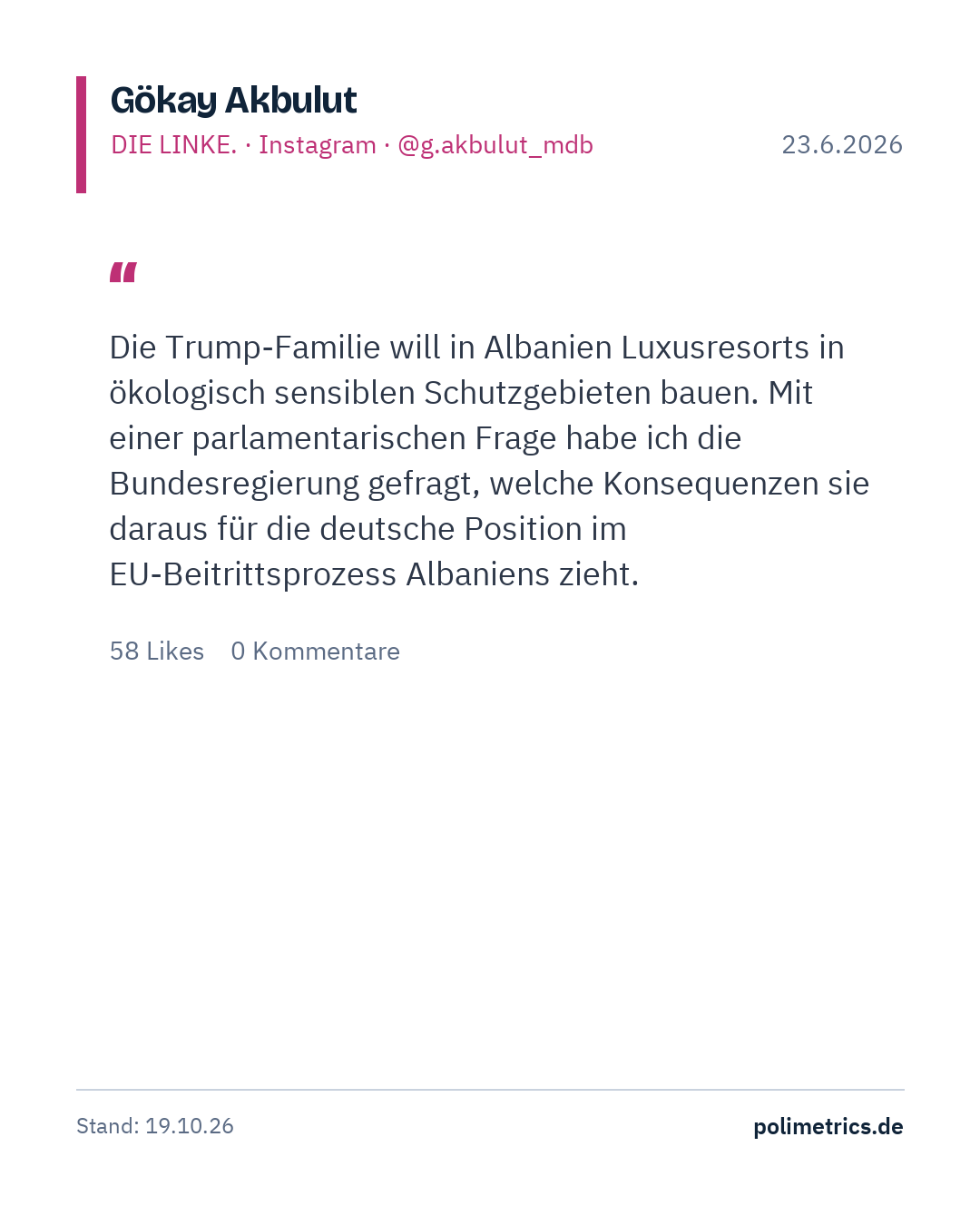
Gökay Akbulut (Die Linke)
Akbulut turns the hashtag into parliamentary work: she formally asks the federal government about consequences for Germany's position in Albania's EU accession process — right as Prime Minister Rama was publicly dismissing the protests as 'ideological nonsense'.
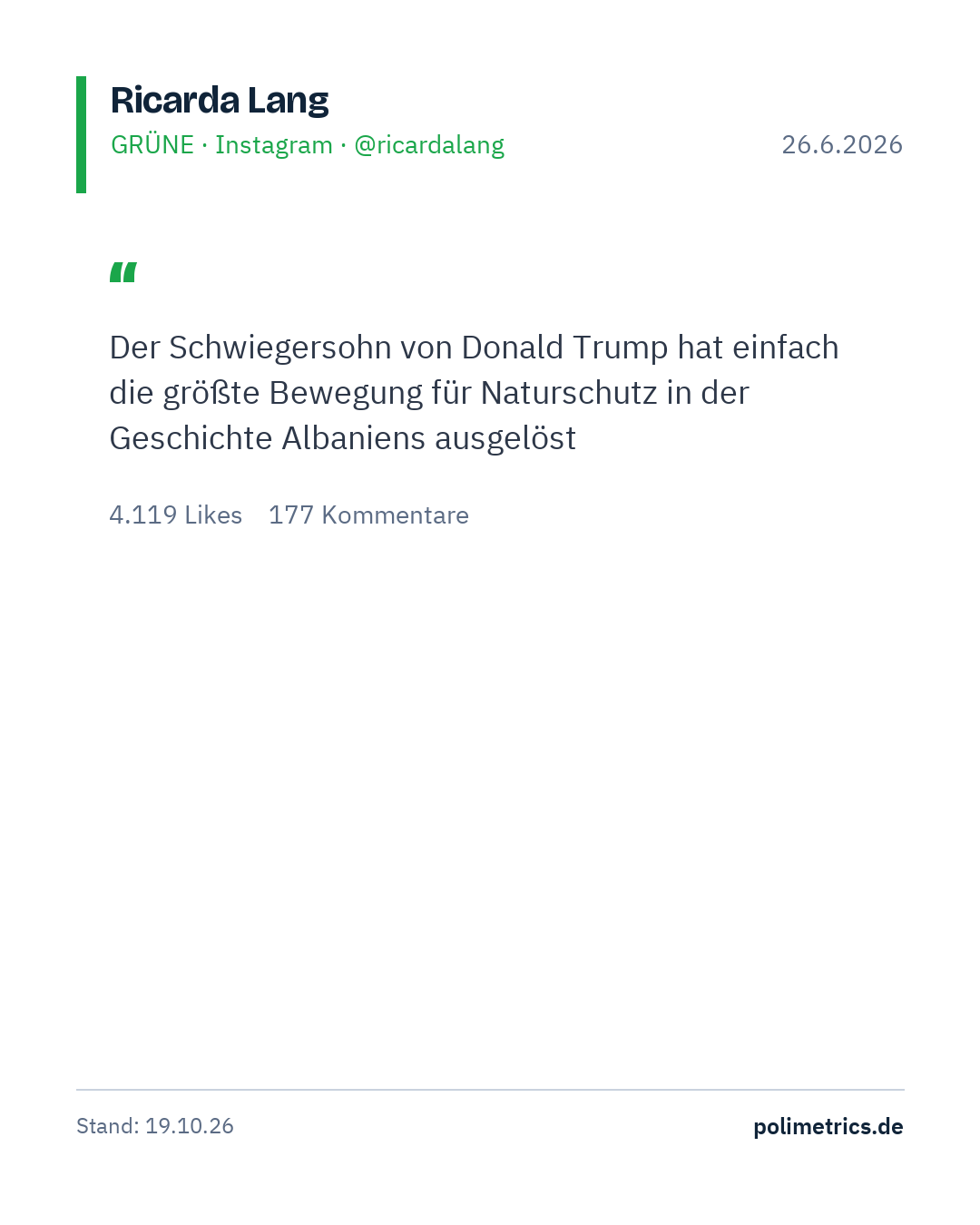
Ricarda Lang (Greens)
The former Green party co-leader explains the protests to her audience, with a clear focus on the Trump family's role as the project's backer.
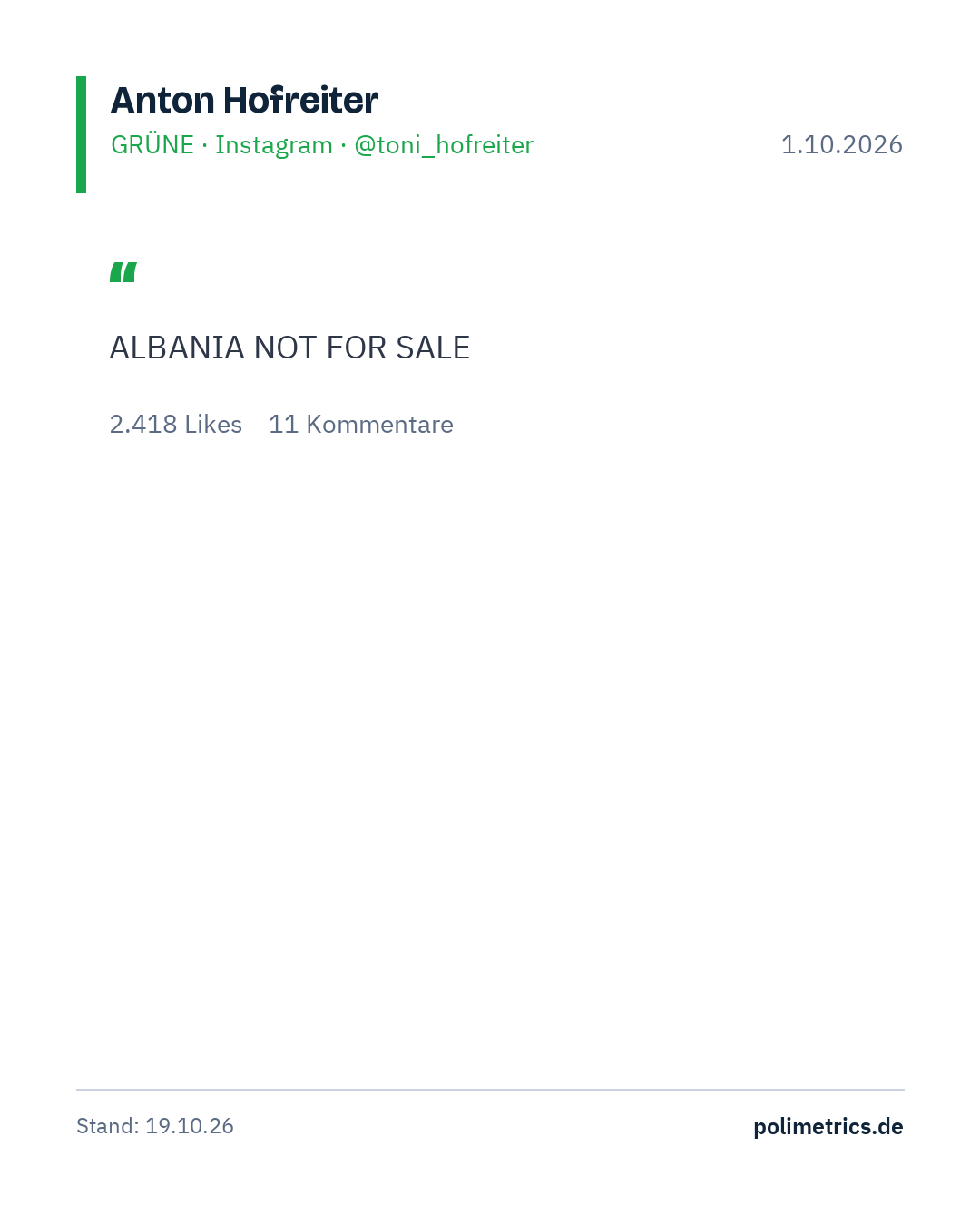
Anton Hofreiter & Boris Mijatović (Greens)
During a Bundestag Tourism Committee delegation trip to Tirana, both post the same message — technically a single shared Instagram post appearing on both profiles. Our automated analysis missed it on the first pass: the three-word caption was too short to clear the similarity filter. A manual spot-check later found it.
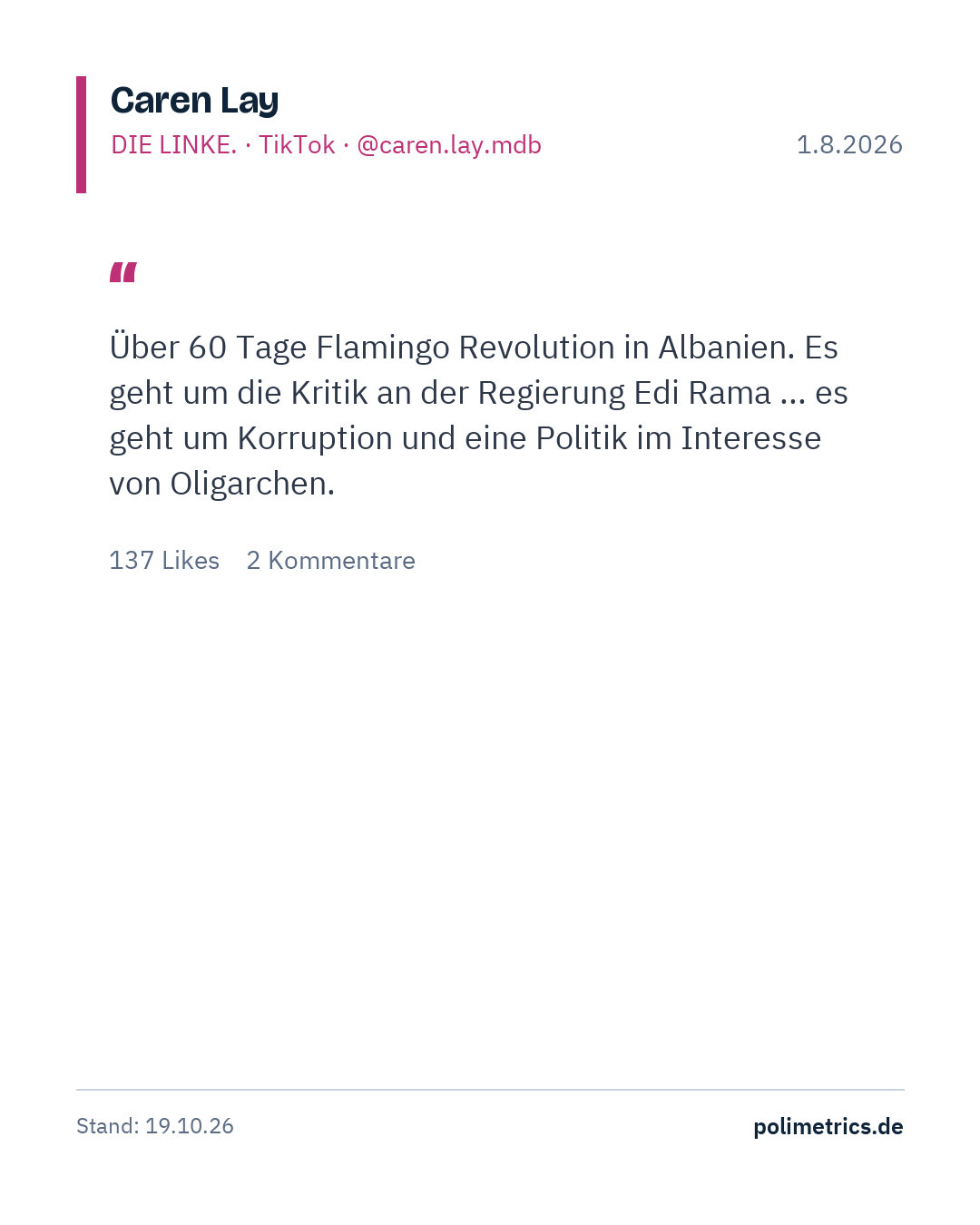
Caren Lay (Die Linke)
Lay visits the protests while on vacation and, alone among the MPs in this dataset, produces her own explainer videos for TikTok — each published on Instagram in parallel.
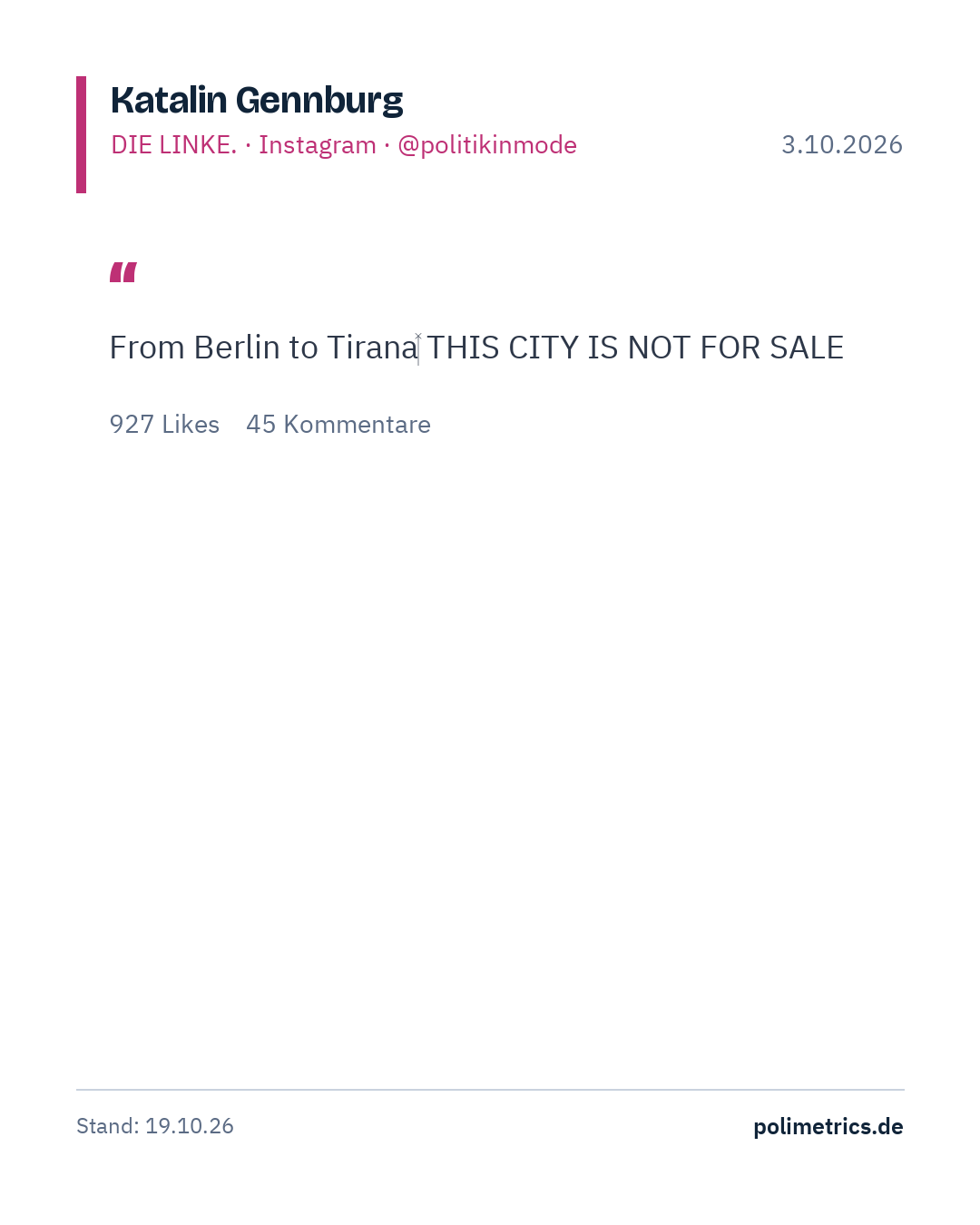
Katalin Gennburg (Die Linke)
Gennburg was also part of the Tourism Committee delegation in Tirana and posts the most recent entry in the dataset — explicitly tying her trip to the Flamingo Revolution on the ground.
Knut Abraham (CDU/CSU) — October 20 update
Abraham is reacting to the newer protest wave against corruption and Prime Minister Rama, escalating since October 12 — not to the Flamingo Revolution. The first CDU/CSU post about Albania in the entire observation window.
Tino Chrupalla (AfD) — October 20 update
The AfD co-leader mentions Albania alongside France, Spain and Italy as evidence of a 'social crisis in Europe' — embedded in a post primarily about Berlin's coalition debate, not as a standalone take on the protests.
Method and limits
- Topic filter pipeline (xminer.analysis.x.topic_filter_related_posts), extended with TikTok support for this analysis: an OpenAI embedding prefilter (text-embedding-3-large) over every Bundestag post in the window June 1 to October 19, 2026, followed by two classification passes with Gemini 3.8 Flash.
- Data for X and Instagram reflects the regular weekly crawl, current as of October 18, 2026. For this analysis we additionally ran a targeted, direct check of the nine MPs involved plus four further delegation members through October 19, 2026, without any database writes — no new topic-related posts were found.
- Two posts (Hofreiter, Mijatović, October 1) were initially missed by the automated similarity filter because the caption was too short. They were found and added after a manual spot-check of the highest-scoring posts the filter had not flagged.
- We count distinct political statements: if the same person cross-posts the same message to a second platform, or reposts it unchanged minutes later, that counts as one post. If two different MPs post the same (e.g. jointly shared) post, that counts as two distinct posts.
- Update, Oct 20, 2026: rather than a targeted check of the already-known voices, this time we ran a full production data sweep of all roughly 1,500 Bundestag X/Instagram/TikTok accounts directly against live platform data (the xminer codebase's regular fetch pipeline, with database writes), followed by a keyword search over the refreshed, complete dataset. That surfaced two new posts that the previous check — scoped to nine known accounts — couldn't have found.